
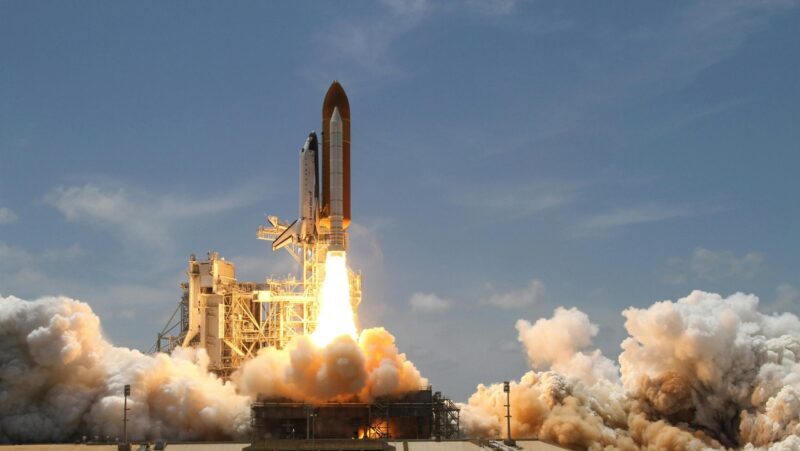
Contrary to what happened at Apollo 13, what is happening in the Italian energy sector was well predictable, and long ago: the comments of Kaiser Franz, who had just been appointed at the top of ENEL in 1996, complaining about the high cost of fuels used in the ENEL multi-fuel power plants, arguing that it would have cost him less to burn the much more well-known and famous perfume Chanel No. 5, they proved to be unfounded, as the people involved knew.
Then the equivalent index of what is now the PUN, Prezzo Unico Nazionale, was in the order of 42 €/MWh, while today the average of the just ended year 2024 was 109 €/MWh with peaks up to 275 €/MWh, with an increase of +160% and +554%, much higher than the ISTAT Index of consumer prices for households, workers and employees which stands in the same period at a much more modest +60%.
Privatisations have taken place. Today the Italian State is in a minority position in all the national energy sector, although public debt meanwhile, instead of decreasing, has increased by more than 742 € billion (source: Eurostat) in line with the charges that citizens are expected to pay on their energy bills for an unchanged service provided over the last two decades. Liberalisation has not prevented a significant increase in net energy imports from those neighbouring Countries that have maintained state control of this strategically crucial sector. This is added to the current stalemate in which the National TSO Terna is, „forced“ to manage a demand for new connection to NTG almost 7 times higher than the actual maximum peak of power currently required, without considering the additional high demand for connection from the distributors. All this will necessarily leave many private operators with a dry mouth or with technically sudden and economically unviable solutions.
A summary of what has happened in the last 25 years can be found in the synoptic table available at this link.
Unlike the Apollo 13, it is not certain that it will end as well: industries, families, individuals are no longer able to withstand this fictitious and artifact „market“, with disastrous consequences on the entire chain of the energy sector: we must therefore become more aware of the finite and limited energy resource, and free it from the blind forces of the invisible hand of the market. Decisions, programmes, mechanisms and processes are required, specifically geared to having sustainable energy for all in the most efficient and cost-effective way possible, avoiding any speculative mechanism, as when it is intended to increase their profitability at the expense of people and the planet